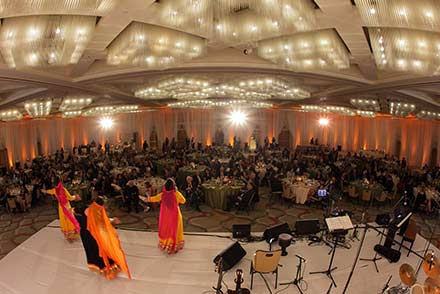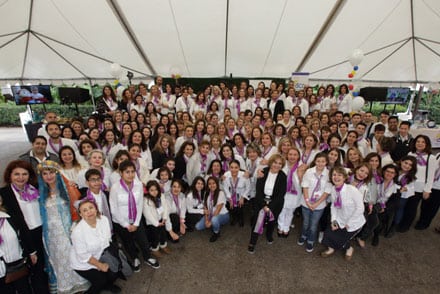

Walk for Wishes
A wish improves children's state of mind, replacing fear with excitement and helping them to feel like kids again. ISCC is proud to have been an essential part of granting such a wish. Before Alejandro Age 12 was diagnosed with acute lymphoblastic leukemia, he used to go to his friend's house and play video games. Since he started receiving chemotherapy treatments, he had not been able to go out much.
It gives us great pride and pleasure to report to our kind and
generous donors the wonderful news that ISCC's "OFAC License"
has arrived. This will allow us to forward your valued contributions
to MAHAK in the very near future.
Thank you very much for your continued support, compassion
and generosity. Together we are saving thousands of cancer stricken
children.

DID YOU KNOW?
Show all | Hide all
70% of the world's children with cancer receive either very substandard care or none at all.
(Source: SIOP 2010, Worldwide Childhood Cancer)
- Current Survival Rates:
High-income countries: ~ 75%
Middle or low-income countries: <20%
(Source: Lancet Student, November 17, 2010)
- In 20 years the 5-year survival rates for all childhood cancers combined has increased from 58.1% to 79.6 %.
(Source: American Cancer Society)
- 4 out of 5 children diagnosed with cancer today can be successfully treated
(Source: International Classification of Childhood Cancer (ICCC))
- Overall, five-year survival rate of children with cancer is 80%.
(Source: Cancer Facts and Figures 2010)
Cancer is the leading cause of death by disease in children between the ages of 1 and 19
- Every year more than 160,000 children are diagnosed with cancer around the world.
- Cancer is the second most common cause of death, after accidents, among children in developed countries.
- 80% of children with cancer are in resource-constrained countries where access to information, early detection and effective treatment and care is often poor.
- More than one in two of these children diagnosed with cancer will die due to lack of resources.
- Two-thirds of cancer-related deaths occur in countries where resources available for cancer control are limited or nonexistent.
- Childhood cancers represent an important global public health problem.
- Access to proper medical care would save tens of thousands of children worldwide annually.
People living in poverty are at greater risk of dying from cancer
A new study looking at the survival and stages of cancer has found that people living in poor neighborhoods have a greater risk of dying after cancer than people with higher socioeconomic status.
“These patients are generally diagnosed later than others, and were less likely to get state-of-the-art cancer care,” said Tim Byers, MD, MPH, lead author of the study and deputy director of the University of Colorado Cancer Center. “Being poor increases your chance of dying from cancer.”
(Source: University of Colorado Denver)
In the United States
- Leukemia accounts for about 32.7% of childhood cancer cases
- Brain and central nervous system (CNS) cancers including cancers of the spinal cord count for 20.7%
Most common types of cancer in children 14 and under are:
Leukemia
- Acute Lymphoblastic Leukemia (ALL)
- Acute Myeloid Leukemia (AML)
Brain and central nervous system (CNS)
- Astrocytoma
- Brain Stem Glioma
- High Grade Glioma
- Central Nervous System
- Craniopharyngioma
- Desmoplastic Infantile Ganglioglioma
- Ependymoma
- Medulloblastoma
Neuroblastoma a cancer of immature nerve cells frequently arising in the adrenal glands, which are located on top of the kidneys and are part of the body’s endocrine (hormonal) system
Wilms tumor a cancer of the kidney
Non-Hodgkin lymphoma and Hodgkin lymphoma cancers that begin in the lymph system
Rhabdomyosarcoma a type of cancer that begins in the striated muscle, which are the skeletal voluntary muscles that people can control
Retinoblastoma a cancer of the eye
Osteosarcoma and Ewing's sarcoma cancers that begin in the bone
Germ cell tumors a rare cancer that begins in the special cells that become the testicles in men and ovaries in women
Pleuropulmonary blastoma a rare lung cancer that begins in the chest